
From Borax to Bio‑Based: A Formulator’s History of Fire Retardant Coatings
Three centuries of recipe changes, one persistent goal: keep heat away from the structure underneath. We trace how the chemistry inside fire retardant coatings evolved, why regulation kept forcing reformulation, and where the white space sits for new entrants.
If you are sizing up the fire retardant coatings market as a business opportunity, the single most useful thing you can study is not a market report. It is the formulation history. Every shift in this industry, every discontinuity that created an opening for a new supplier, was triggered by one of two forces: a chemistry that worked better, or a regulation that made the old chemistry unsellable. The companies that thrive are the ones that read those forces early.
What follows is a walk through that history, told from the formulation bench rather than the boardroom. We will look at what was actually in the can at each era, why it changed, and what the current research literature says is coming. Everything factual is referenced, because in an industry built on certification and trust, an unsourced claim is worth nothing.
01The salt age: alum, borax and theatre curtains
The first documented flame retardant formulation was a patent granted in England in 1735 to Obadiah Wyld, covering a treatment for textiles and wood based on alum, borax and ferrous sulfate[1]. The logic was sound and still is: mineral salts do not burn, they absorb heat as they decompose, and they leave a glassy residue that shields the material below. In 1821, Gay-Lussac systematised the idea for French theatres, treating stage fabrics with a blend of ammonium phosphates, ammonium chloride and borax, work that historians of the field still cite as the conceptual starting point of flame retarded textiles[2].
For more than a century the recipe barely moved. Fire protection of buildings meant mass: concrete encasement, gypsum plaster, brick. Coatings were decorative. The idea that a paint film a fraction of a millimetre thick could protect a steel column against a fully developed fire would have sounded absurd, because no one had yet found a chemistry that could turn a thin film into a thick insulator on demand.
02The halogen decades: effective, cheap, and eventually untouchable
The mid twentieth century brought synthetic polymers, and with them the first modern flame retardant additives. Brominated and chlorinated compounds, often paired with antimony trioxide as a synergist, worked in the gas phase: when heated they released halogen radicals that interrupted the chain reactions of combustion in the flame itself[9]. They were efficient at low loadings, compatible with many binders, and cheap. By the 1960s and 1970s halogenated chemistry dominated flame retardancy across plastics, textiles, foams and coatings.
The cracks appeared early. In 1977, US regulators moved against Tris, a brominated phosphate used in children’s sleepwear, after it was found to be mutagenic; the episode made flame retardants a consumer safety story for the first time[5]. The bigger reckoning came with the polybrominated diphenyl ethers (PBDEs). Evidence accumulated that they persisted in the environment, accumulated in people, and carried real toxicity concerns. The EU banned the penta and octa formulations in 2004, the sole US manufacturer stopped production at the end of that year, and in 2009 they were listed under the Stockholm Convention on persistent organic pollutants[8][11].
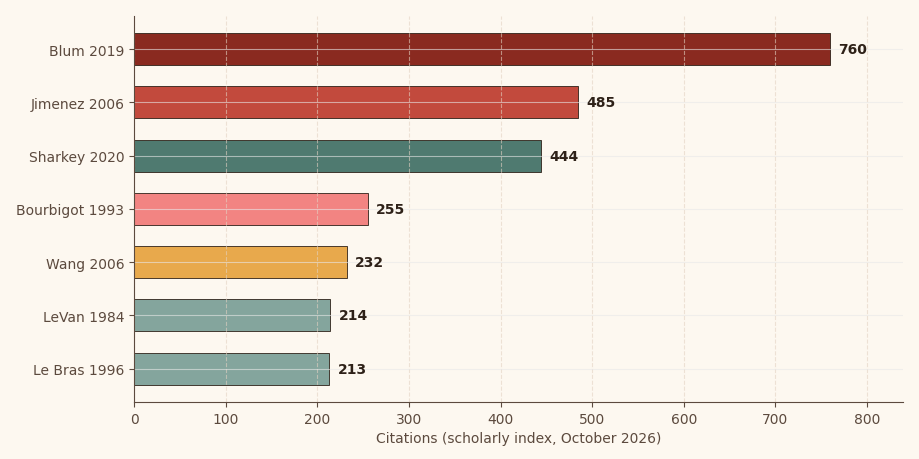
One caution from this era matters for any founder today. A 2019 analysis in Environmental Science and Technology Letters, now one of the most cited papers in the field, asked whether the organophosphate esters that replaced PBDEs were simply a “regrettable substitution”, swapping one problematic chemistry for another before the health data were in[10]. The lesson: in this market, a formulation is a regulatory position, not just a technical one.
03The intumescent idea: a coating that builds its own insulation
While halogens ruled the additive world, a different idea was maturing. The first intumescent fire protection was patented in the 1940s, with workable coatings developed through the 1950s and 1960s[3]. The concept is elegant. Instead of trying to stop combustion, you formulate a coating that, at a defined temperature, undergoes a choreographed chemical reaction and swells into a thick, carbon rich foam. That char has very low thermal conductivity, so the thin film effectively manufactures its own insulation layer exactly when it is needed[4].
Commercial takeoff came in the 1980s in Europe, when oil companies adopted epoxy intumescents to protect structural steel against hydrocarbon fires offshore, and architects discovered that thin film versions could leave steel exposed to view instead of burying it in concrete[4]. The classic recipe that emerged, and that still anchors most formulations today, is a trio: ammonium polyphosphate (APP) as the acid source, pentaerythritol (PER) as the carbon source, and melamine as the blowing agent[4]. In the 1990s, teams led by Camino, Le Bras and Bourbigot published the mechanistic studies that turned intumescence from a craft into a science, mapping how the acid catalyses charring of the carbon source while the blowing agent’s gases inflate the melt into a foam[6][7].
20 °CAMBIENTDormant
At service temperature the coating is just a paint film: pigmented, weatherable, a fraction of a millimetre to a few millimetres thick depending on the system.
~220 °CFILLERS WAKEEndothermic helpers activate
In metal-hydroxide-filled systems, aluminium trihydroxide begins its endothermic decomposition near 220 °C, releasing about 35% of its weight as water and absorbing heat while it does.
250 to 350 °CACTIVATIONThe chemistry switches on
Around 250 to 270 °C the acid source (ammonium polyphosphate) decomposes, generating polyphosphoric acid that begins dehydrating the carbon source into a char precursor. This is where real protection starts.
300 to 350 °CTHE SWELLThe film becomes a foam
The blowing agent releases gases around 300 to 350 °C. The softened melt traps them and expands many times its original thickness into a porous, low-conductivity carbonaceous char.
550 °CTHE LINE THAT MATTERSSteel’s limiting temperature
A fully loaded steel beam exposed on four sides reaches 550 °C in about 16 minutes in a standard fire test. A properly built char holds the steel below this line, turning minutes into a one, two or three hour rating.
620 °C+SUSTAINED FIREThe char takes the punishment
Beyond 620 °C the char itself is the structure under attack. Formulations with nano-synergists and reinforcing fibres keep it coherent; weak chars crack, delaminate and fail. This is where formulation quality is decided.
04Regulation rewrote the recipe book
The 2004 to 2009 PBDE decisions did more than ban a few molecules. They changed the direction of formulation research worldwide, pushing the industry toward phosphorus, nitrogen and inorganic chemistries, and toward systems that work in the condensed phase (building protective char) rather than the gas phase[8]. For coatings, that shift favoured technologies already in motion: intumescents, and heavily filled systems based on metal hydroxides.
The hydroxide story is worth understanding because it shows the trade-off logic of this industry. Aluminium trihydroxide (ATH), the world’s most widely used flame retardant by volume, decomposes endothermically from about 220 °C, releasing roughly 35% of its weight as water and leaving an alumina residue; magnesium hydroxide does the same job from about 330 °C[19][23]. The chemistry is clean, cheap and halogen free. The catch is loading: these fillers often need to make up half or more of the formulation to perform, which constrains film properties. That tension, clean chemistry versus usable loading, is exactly where formulation skill converts into margin.
05The modern toolkit: waterborne binders, nano-synergists, thinner films
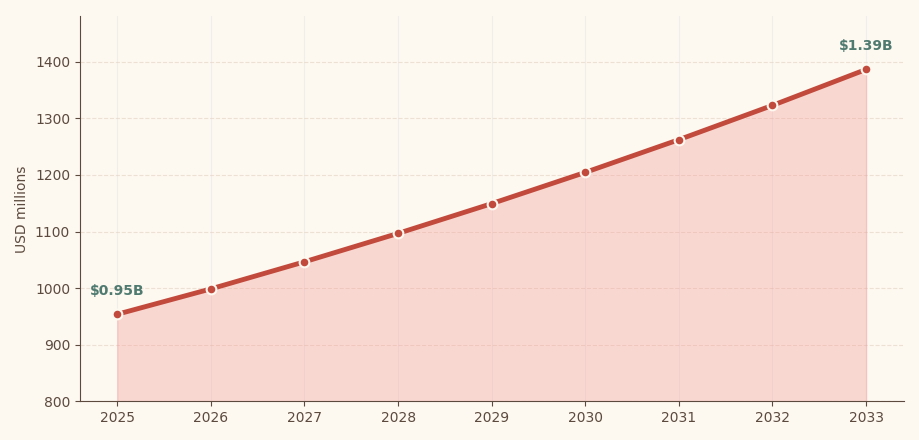
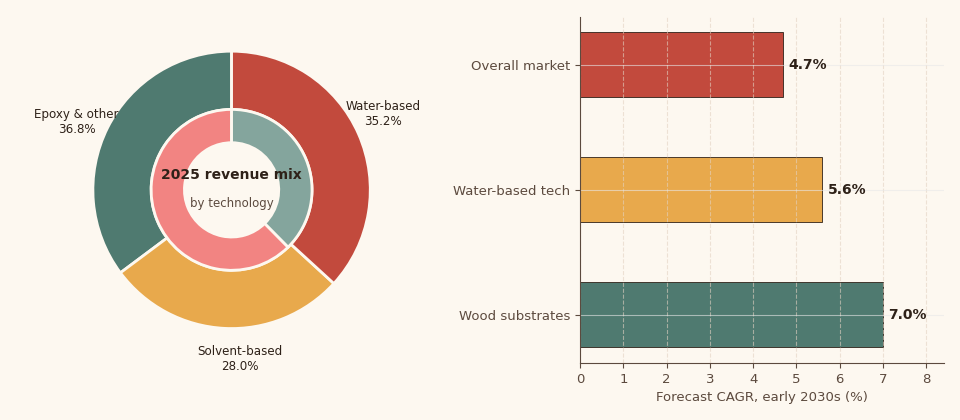
Today’s development work clusters around three fronts. The first is the carrier: water-based intumescents are the largest technology segment and are growing faster than solvent-borne systems as VOC rules tighten[14][18]. The second is synergy. A landmark 2006 study by Wang, Han and Ke showed that nano-scale additives, including nano silica and layered double hydroxides, could strengthen the char, slow its oxidation, and improve both fire resistance and weathering of APP/PER/MEL coatings[13]. Two decades on, nanoclays, expandable graphite, carbon nanotubes and graphene are standard tools for squeezing more performance out of the classic trio at lower film builds[14][16].
The third front is durability, the field’s quiet weakness. Water immersion testing has shown that conventional acrylic APP/PER/MEL coatings can lose a third of their fire resistance after 500 hours of soaking, which is why microencapsulated APP, hydrophobic surface treatments and topcoat systems are now central to product development rather than afterthoughts[14].
06The next chapter: formulations that grow instead of being mined
The newest research frontier borrows from the oldest era in this story. Bio-based flame retardants, built from phytic acid (the phosphorus store of plant seeds), chitosan (from crustacean shells), lignin, tannic acid, cyclodextrins and even coffee husk, are the fastest moving corner of the literature, with comprehensive reviews cataloguing them now appearing every year[16][17]. In a pleasing historical loop, Gay-Lussac’s 1821 fabric treatments are now described as the conceptual ancestor of this bio-based movement[2].
An honest assessment for a commercial reader: most bio-based systems are still laboratory curiosities rather than certifiable products. The papers show impressive char formation and flame retardancy, but durability, water resistance, scalable raw material supply and the long furnace testing cycles for standards like UL 263, EN 13381-8, BS 476 and GB 14907 stand between a journal result and a sellable coating[19b]. That gap is not a reason to dismiss the field. It is the opportunity. The company that industrialises a durable bio-based or nano-synergised formulation first will own a specification niche for years.
07What 290 years of reformulation tells a founder
Sell the mechanism, not the molecule
Every winning era was defined by a mechanism: mineral heat sinks, gas-phase radical scavenging, condensed-phase char. Position your product on how it protects, and the specific chemistry can evolve underneath as regulations shift.
Regulation is your market research
The PBDE phase-out created the entire halogen-free market segment within five years. Track REACH, the Stockholm Convention and VOC directives the way other founders track competitors[8].
Durability is the unsolved problem
Fire resistance on day one is table stakes. Coatings that keep their rating after years of humidity, immersion and UV exposure are where premium pricing lives[14].
Certification is the moat
The top five suppliers hold 56.5% of the market largely because furnace testing across UL 263, EN 13381-8, BS 476 and GB 14907 is slow and expensive. Budget for it from day one, or aim first at segments with lighter approval cycles[19b].
Watch mass timber
Wood substrates are forecast to grow around 7% annually, the fastest in the market, and architects want coatings that protect without hiding the grain. A transparent or low-visibility intumescent for mass timber is one of the clearest white spaces on the map[18].
The arc from Wyld’s borax bath to a graphene-dosed waterborne intumescent is not a story of chemistry replacing chemistry. It is a story of constraints changing: first the constraint was whether anything worked at all, then whether it was safe to live with, now whether it is sustainable to produce. Founders who understand which constraint is binding at any moment tend to build the right product. The literature says sustainability and durability are the binding constraints of this decade. History says that is exactly when new suppliers break in.
08References and Further Reading
- US Patent 4,184,969 (1980), background on Wyld’s 1735 formulation. Google Patents
- Villamil Watson, D.A., Schiraldi, D.A. (2020). Biomolecules as Flame Retardant Additives for Polymers. Polymers 12(4), 849. mdpi.com
- Ceasefire (2024). The Invention of Intumescent. ceasefire.com.au
- Institute of Corrosion (2025). PFP: An Introduction to Intumescent Coatings. icorr.org
- Sanders, H.J. (1978). Flame retardants. Chemical & Engineering News 56(17). pubs.acs.org
- Bourbigot, S., Le Bras, M., Delobel, R. (1993). Carbonization mechanisms resulting from intumescence with the APP-PER system. Carbon 31(8). sciencedirect.com
- Le Bras, M., Bourbigot, S. et al. (1996). New intumescent formulations of fire-retardant polypropylene. Fire and Materials 20(4). wiley.com
- Sharkey, M. et al. (2020). Phasing-out of legacy brominated flame retardants: the UNEP Stockholm Convention and other legislative action worldwide. Environment International 144. sciencedirect.com
- LeVan, S.L. (1984). Chemistry of fire retardancy. ACS Advances in Chemistry. pubs.acs.org
- Blum, A. et al. (2019). Organophosphate ester flame retardants: are they a regrettable substitution for PBDEs? Environmental Science & Technology Letters 6(11). pubs.acs.org
- US Environmental Protection Agency (2009). Polybrominated Diphenyl Ethers (PBDEs) Action Plan. epa.gov
- Jimenez, M., Duquesne, S., Bourbigot, S. (2006). Intumescent fire protective coating: toward a better understanding of their mechanism of action. Thermochimica Acta 449. sciencedirect.com
- Wang, Z., Han, E., Ke, W. (2006). Effect of nanoparticles on the improvement in fire-resistant and anti-ageing properties of flame-retardant coating. Surface and Coatings Technology 200, 5706-5716. sciencedirect.com
- Nazrun, T. et al. (2025). A Comprehensive Review on Intumescent Coatings. Fire 8(4), 155. mdpi.com
- Ng, Y.H., Dasari, A., Tan, K.H., Qian, L. (2021). Intumescent fire-retardant acrylic coatings: effects of additive loading ratio and scale of testing. Progress in Organic Coatings. sciencedirect.com
- Chen, M. et al. (2025). Recent advancements of bio-derived flame retardants for polymeric materials. Polymers 17(2), 249. mdpi.com
- Wang, X.L., Liu, J.H., Wang, Y.L. et al. (2024). Bio-based flame retardants. In Fire Retardancy of Polymeric Materials. Taylor & Francis
- Grand View Research (2026). Intumescent Coatings Market Size and Trends. grandviewresearch.com
- ScienceDirect Topics. Aluminum Hydroxide (decomposition behaviour of ATH and MDH). sciencedirect.com
- Global Market Insights (2026). Intumescent Coatings Market Report 2026-2035. gminsights.com
- Mordor Intelligence (2026). Fire Retardant Coatings Market. mordorintelligence.com
- SteelConstruction.info. Design using structural fire standards (steel strength at temperature). steelconstruction.info
- Nullifire (2022). Passive fire protection and the importance of limiting temperature. nullifire.com
- Huber Advanced Materials. Alumina trihydrate (ATH) flame retardant properties. huberadvancedmaterials.com
- Zhou, Z. et al. (2024). Water-based intumescent fire resistance coating containing organic-modified glass fiber for steel structures. Journal of Cleaner Production. sciencedirect.com
- Fortune Business Insights (2026). Intumescent Coating Market. fortunebusinessinsights.com